
Looks like paper. Uses power only to change.
E-ink displays reflect the light in the room instead of shining at you — so they look like a printed picture, stay calm in the evening and need no cable.
Pigment, not light.
- 1Tiny colour pigmentsEach pixel holds microscopic pigment particles. Spectra™ 6 uses six colours: black, white, red, yellow, blue and green.
- 2Moved into placeA small electrical charge moves the right pigments to the surface to form the picture.
- 3Then it stays — using almost no powerOnce the picture is set, it stays on screen while consuming almost no power. Power is mainly needed to change the picture.
Changing the picture takes a few seconds. Today's colour e-ink technology is not made for video — it suits content that changes now and then.
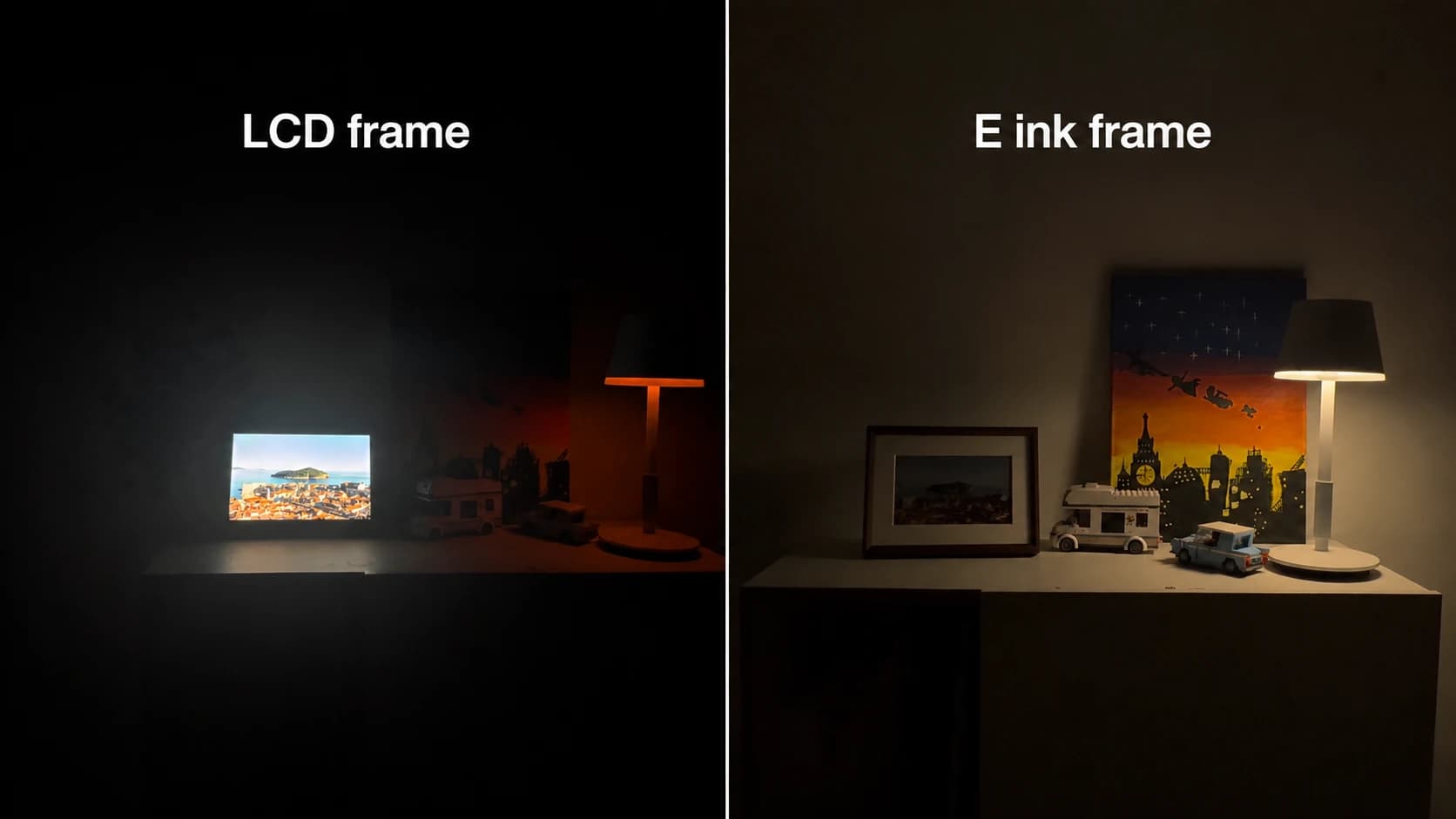
Why e-ink suits signs, menus and art.
Paper-like
A matte, glare-free surface that reads like print, even in daylight.
No glow
No backlight shining into the room; calm in meeting rooms, bedrooms and restaurants in the evening.
Energy efficient
The display only uses power when the picture changes, so MelonFrame runs for months on a battery.
No cables
Place it on a door, desk, table or shelf — no socket needed.
Easy to read
Readable from wide angles and in bright light, like a printed sign.
Let's put MelonFrame in your space.
Pilot places are limited — tell us about your project and we'll review your request.